L-A Advertising | Your GO-TO Ad Agency in Lehigh Valley, PA

Podcasts: A Powerful Marketing Tool
Why Long-form Content is Your Best Kept Secret
What began as an experiment, combining digital audio (and eventually video) with emerging Internet technology, has developed into a valuable medium for entrepreneurs and businesses looking to create a stronger connection with their audiences, demonstrate an expertise, and build a brand.
Where Did the Term "Podcast" Come From?
Podcasts date back to the early 2000s when developers began experimenting with ways to distribute audio files over the Internet. One software developer in particular, Dave Winer, helped develop a technology that allowed broadcast files to be attached to an RSS (Really Simply Syndication) feed. Journalist and broadcaster, Christopher Lydon was recording interviews and publishing them online, at that time, before conducting the now famous 2003 interview with Winer that showcased his new distribution method.
The word “podcast” was coined the following year by British journalist Ben Hammersley who proposed that this new medium be named by combining the words “iPod” and “broadcasting.” And with Apple’s help, the technology was now suddenly available to an even larger audience by building RSS feeds into Apple iTunes and its iPod. What previously required a degree of technical knowledge became something that ordinary listeners could easily discover, subscribe to, and enjoy.
Radio Talk Shows vs. Podcasts

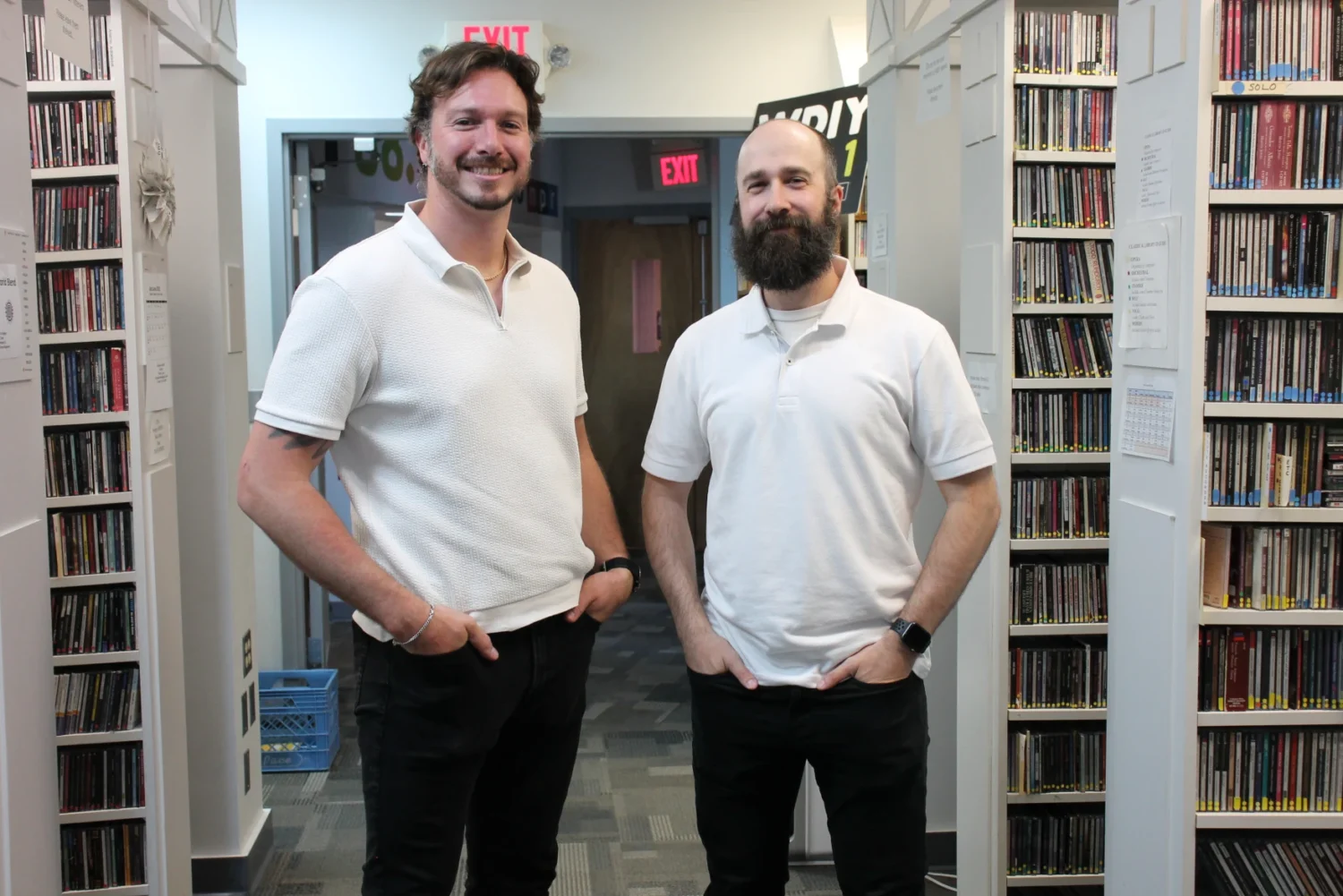
Louis Holzman, Host of Young Valley Leaders WDIY 88.1 with Krista Berardelli, Business Development Manager with Agentis Plumbing.
At first glance, a podcasting sounds a lot like a radio talk show program. Both feature hosts, guest interviews, industry or local news, commentary, and advertising. The fundamental difference is control. Traditional radio is primarily scheduled broadcasting. Because stations dictate the programming, listeners must tune in exactly when their favorite shows airs.

A podcast, however, is “on demand.” This means each episode can be downloaded or streamed whenever and wherever a listener chooses. Furthermore, listeners can discover a new show or episode, months or even years after it was originally published.
Podcast Formats and Distribution
Shows usually feature one or more hosts engaged in a discussion about a particular topic, individual, or event. Episodic formats vary widely in structure, ranging from carefully scripted productions to improvised conversations ranging from topics on scientific research to slice-of-life daily living. Many series provide an associated Website with links to past episodes, campaign resources, guest biographies, or additional forms of multimedia.
A producer normally buys this service from a hosting company such Captivate, Buzzsprout, Podbean, and others who then distribute your media files to podcast directories and streaming services, such as Apple Podcasts, Spotify Podcasts, YouTube Podcasts, and more, which users can access on their smartphones and other digital devices from around the globe!

Buzzsprout Location Stats Dashboard
Podcasts also operate without many of the restrictions of traditional broadcasting services. A radio segment may need to be editing down to fit precisely between commercial breaks or within a tight programming schedules. Whereas, a podcast might last ten minutes to an hour, or three hours! This flexibility encourages a longer and more conversational form of media. Instead of condensing a discussion into shorter segments, a podcast interview can give a guest enough time to explain an idea, tell a story or explore a subject in depth.
And the cost to the consumer is very low. In fact, most shows are free to download and listen to, while more and more productions are underwritten by corporations or sponsored, with the inclusion of commercial advertisements (mid-rolls). Following, or subscribing to your favorite show makes the listening process even easier because new episodes will automatically appear in your saved library or RSS feed. Audiences will listen to programs while driving, exercising, working, cooking, traveling or relaxing.
Add a Podcast to Your Marketing Toolkit
Today Podcast audiences are even more attractive to marketers and entrepreneurs alike. Research has discovered that daily listeners today are more likely than the overall population to have college degrees and higher household incomes, while also showing relatively high rates of business and home ownership. A unique demographic detail to keep in mind when producing a new show.
Additionally, recording video alongside an audio interview doesn’t simply create a second version of the same segment, it creates an entire multimedia library of online marketing material! Instead of creating one piece of content, you or your company can produce a healthy volume of reusable assets that you can repurposed time over time.
The Hub-and-Spoke System
Think of your episodes as the hub of your content strategy, with social media posts, video clips, graphics, and other promotional assets branching out as the spokes. This hub-and-spoke approach allows you to maximize the value of every episode without constantly creating new content. For example, one 30- to 60-minute conversation can produce numerous 00:15 – 00:30 second short-form YouTube Shorts, Facebook and Instagram Reels, LinkedIn videos and even “TikToks”.
Repurposing, however, doesn’t require the same waiting period. You can immediately transform a viral segment into a carousel, turn a guest’s best quote into a graphic, or create a short-form video highlighting key takeaways. The goal is to present proven ideas in fresh formats that appeal to different audience preferences.
Finally, distribute your core content across multiple platforms, either simultaneously or within a few days of each other. Reuse your master video assets, but customize hooks, captions, fonts, and calls to action to fit each platform accordingly. By combining strategic reposting, creative repurposing, and cross-platform distribution, one podcast episode can fuel weeks or even months of content for disseminating across your Website, e-mail marketing campaigns, and even print advertising and public relation opportunities.
Conversational-based, Organic Dialogues
Traditional advertising usually interrupts the consumer’s consumption of content. But a story with a deeper connection enables a business or entrepreneur to become the content. For instance:
- A financial advisor might interview business owners about succession planning
- A healthcare organization could invite physicians and specialists to discuss wellness
- A manufacturer may interview engineers and industry experts about emerging technology
In each case, the professional isn’t simply advertising a product or service, it is demonstrating an expertise, introducing the people behind the solution, and giving customers a reason to spend meaningful time with the brand.
Podcasts can support several marketing objectives simultaneously: brand awareness, consumer education, relationship building, industry expertise, recruitment, and more.
The long-form nature of podcasting also creates something most advertisers cannot; time. A good podcast can hold someone’s attention for 20, 30 or 60 minutes. Over multiple episodes and interesting topics, listeners begin to recognize the host’s personality, expertise, and point of view. This familiarity can help turn an individual or company from an unfamiliar name into a trusted source of information.



The Future of Digital Broadcasting

According to Edison Research at SSRS’s Infinite Dial, approximately 230 million Americans (80% of the population) have listened to a podcast at some point. Even more impressive, 167 million Americans their favorite show during the previous month, while approximately 130 million consumed one during the previous week. And as of August 2026, the Podcast Index listed about 4.7 million podcast feeds, of which about 438,000 had published an episode in the previous 90 days.
Podcasting is no longer a niche medium. Some of the more established categories include comedy, news and current events, true crime, business, sports, health and wellness, technology, history, education, entertainment and personal development. Popular shows illustrate just how varied audiences can be. Recent Edison Research Podcast Metrics rank popular programs such as The Joe Rogan Experience, Crime Junkie, The Daily, Call Her Daddy, Dateline NBC, This American Life, and New Heights.
This new medium can therefore serve both extremely broad audiences and smaller, more defined ones. Your next show doesn’t necessarily need millions of listeners to be valuable. A program followed by only a few thousand listeners who share a very specific profession, hobby, industry, or interest can form a very intimate and loyal fan base.
This flexibility is one of podcasting’s greatest strengths. For instance, video has moved rapidly into the long-form mainstream, driven largely by YouTube and increasingly supported by platforms such as Spotify. In fact, Edison Research reported in 2026 that program watching (and listening) among weekly consumers has become virtually even.
Local Podcasts Produced and Supported by L•A Advertising
Rooted in faith, this heartfelt, purpose-driven series is intended for caregivers, seniors, and their families navigating the challenges of aging and the decisions and emotions that follow.

Hearing healthcare’s original and longest running podcast. Hearing Matters combines education, entertainment, and all things associated with hearing and listening into one program.

Whether you’re working toward a health goal, navigating a new health challenge, or simply curious about taking better care of yourself, this show delivers approachable conversations to the questions that matter most to all of us.

Young Valley Leaders facilitates a monthly discussion featuring the Lehigh Valley’s upcoming movers and shakers, young professionals and community leaders who are making it happen for themselves and those around them.